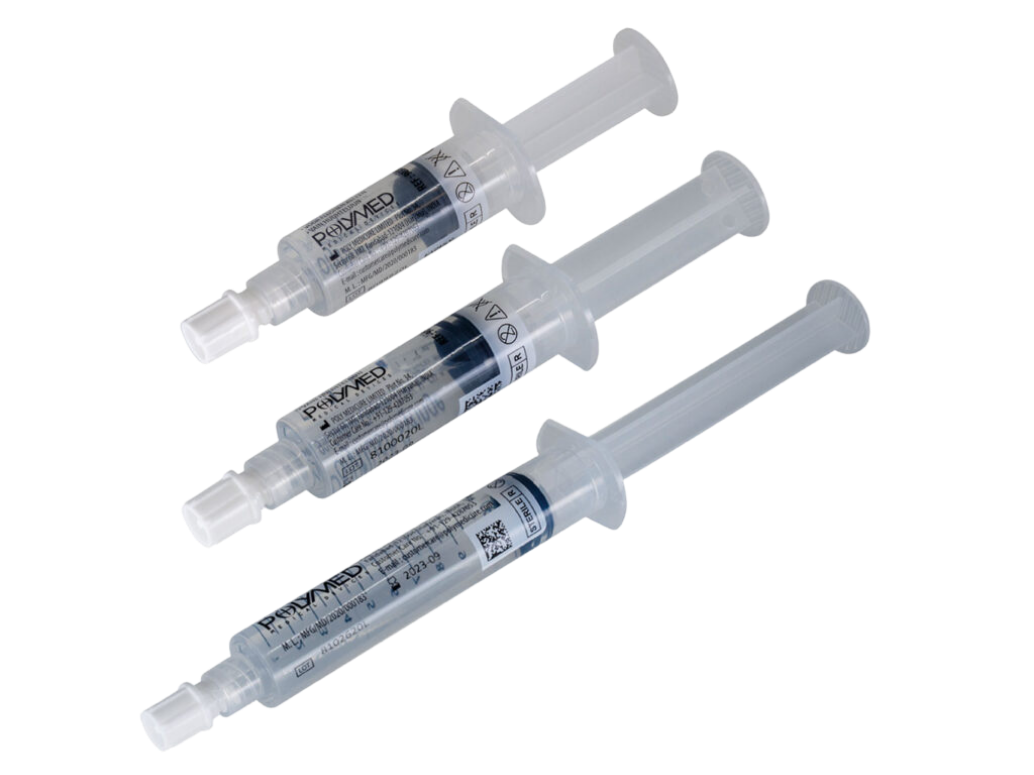






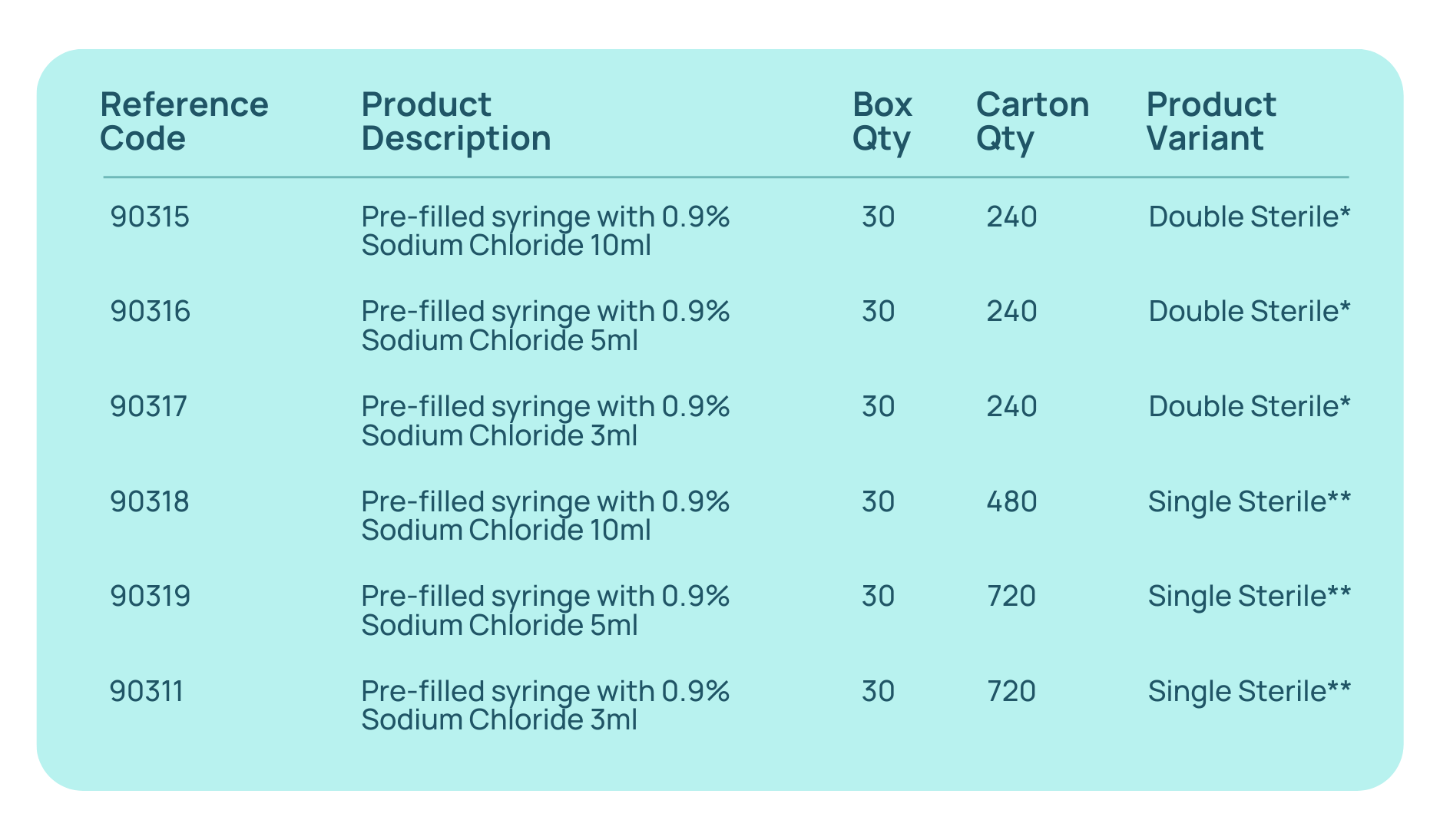
*Double Sterile - Sterile fluid path + Sterile syringe
**Single Sterile - Sterile fluid path

1. Austin P, Elia M. Improved aseptic technique can reduce variable contamination rates of ward-prepared parenteral doses. JHosp Infect. 2013 Feb;83(2):160-3.
2. Hadaway, Lynn. (2006). Flushing vascular access catheters: Risks for infection. Infection Control Resource. 2006, Vol.4(2)
3. Keogh S, Marsh N, Higgins N, Davies K, Rickard C. A time and motion study of peripheral venous catheter flushing practice using manually prepared and prefilled flush syringes. J Infus Nurs. 2O14 far-Apr;37(2):96-1O1.
4. Infusion Therapy Standards of Practice. Journal of Infusion Nursing. Supplement to 2016 Jan/Feb, Vol.39(1S)
5. Hamze B, Vaillancourt R, Sharp D, Villarreal G. A Comparison of Taste and Odor Perception in Pediatric Patients Receiving a 0.9% Sodium Chloride Flush From 2 Different Brands of Prefilled 0.9% Sodium Chloride Syringes. J Infus Nurs. 2016 Jan-Feb;39(1):18-24.
6. Bertoglio S, Rezzo R, Merlo FD, Solari N, Palombo D, Vassallo F, Beltramini S, DeMaria A. Pre-filled normal saline syringes to reduce totally implantable venous access device-associated bloodstream infection: a single institution pilot study. J Hosp Infect. 2O13 May;84(1):85-8.
7. Bouya S, Balouchi A, Rafiemanesh H, et al. Global Prevalence and Device Related Causes of Needle Stick Injuries among Health Care Workers: A Systematic Review and Meta-Analysis. Ann Glob Health. 2020 Apr;86(1):35.